Geomicrobiology
Quantifying Microbial Metabolic Flux and Redox Dynamics through DNA-SIP and Advanced Gas Chromatography.

Quantifying Microbial Metabolic Flux and Redox Dynamics through DNA-SIP and Advanced Gas Chromatography.
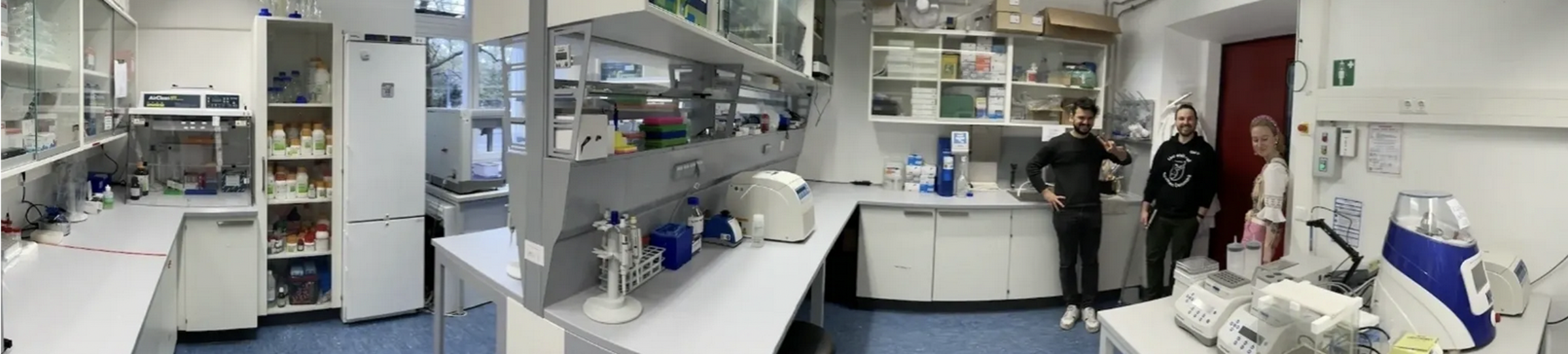
The Geomicrobiology laboratory at the Department of Earth and Environmental Sciences specializes in quantifying microbial metabolic fluxes and redox dynamics within environmental samples such as sediments, soils, and rocks. A methodological cornerstone is DNA Stable Isotope Probing (DNA-SIP), which allows researchers to identify active microorganisms by tracking the incorporation of stable isotopes into their genetic material. Combined with density gradient ultracentrifugation and quantitative PCR, this enables the precise determination of microbial abundance and functional activity.
To analyze metabolic processes, the facility provides dedicated RNA clean hoods for transcriptomics and advanced GC-MS systems for measuring gas concentrations of hydrogen, methane, and carbon dioxide, including their isotopic signatures. The infrastructure also supports anaerobic enrichment and cultivation to simulate specific environments, such as ferruginous analog oceans. This is complemented by fiber-optic oxygen sensing and UV/VIS spectrophotometry for real-time monitoring of microbial respiration and redox status. Consequently, the lab offers a comprehensive analytical pipeline from molecular biology to the quantitative assessment of biogeochemical cycles.